
What to Expect During a Hearing Test
IN SHORT
A hearing test is a procedure that includes a discussion of your medical history, a physical ear inspection, and tests for speech detection and understanding. This procedure usually takes between 45 and 60 minutes.
Hearing tests are often recommended following a hearing screening, which is a 15 min procedure, usually free of charge.
Duration of the Hearing Test
A hearing test is a means of assessing the condition of your ear and hearing to establish a complete profile of your auditory system.
Although it involves several different aspects, the test usually takes about an hour.
The Hearing Test Procedure
Generally recommended following a hearing screening, the hearing test is a comprehensive procedure that analyzes all aspects of your hearing.
The steps may vary slightly depending on your needs, but the test is usually composed of three steps.
Questions and Discussion
Prior to entering technical procedures, a series of questions about your health and medical history are used to establish specific causes or needs, if applicable.
Your medical history or lifestyle may be behind temporary or permanent hearing loss, such as occupational deafness.
Checking the Condition of the Ear
Using an otoscope, a healthcare professional can examine the condition of your ear and identify minor problems, such as earwax blockage.
This examination also makes it possible to detect abnormalities, including an infection or damage to the ear canal or eardrum.
Of course, this initial check is not comprehensive, as it can’t provide a view of the condition of your inner ear. That’s why it’s usually followed by detection and comprehension tests to evaluate the quality of your hearing.
Speech Detection and Comprehension Tests
Once the preliminary tests are done, the actual hearing test can begin.
Detection and comprehension tests are two aspects of the same procedure that aims at assessing the hearing quality and auditory disorders that might be present.
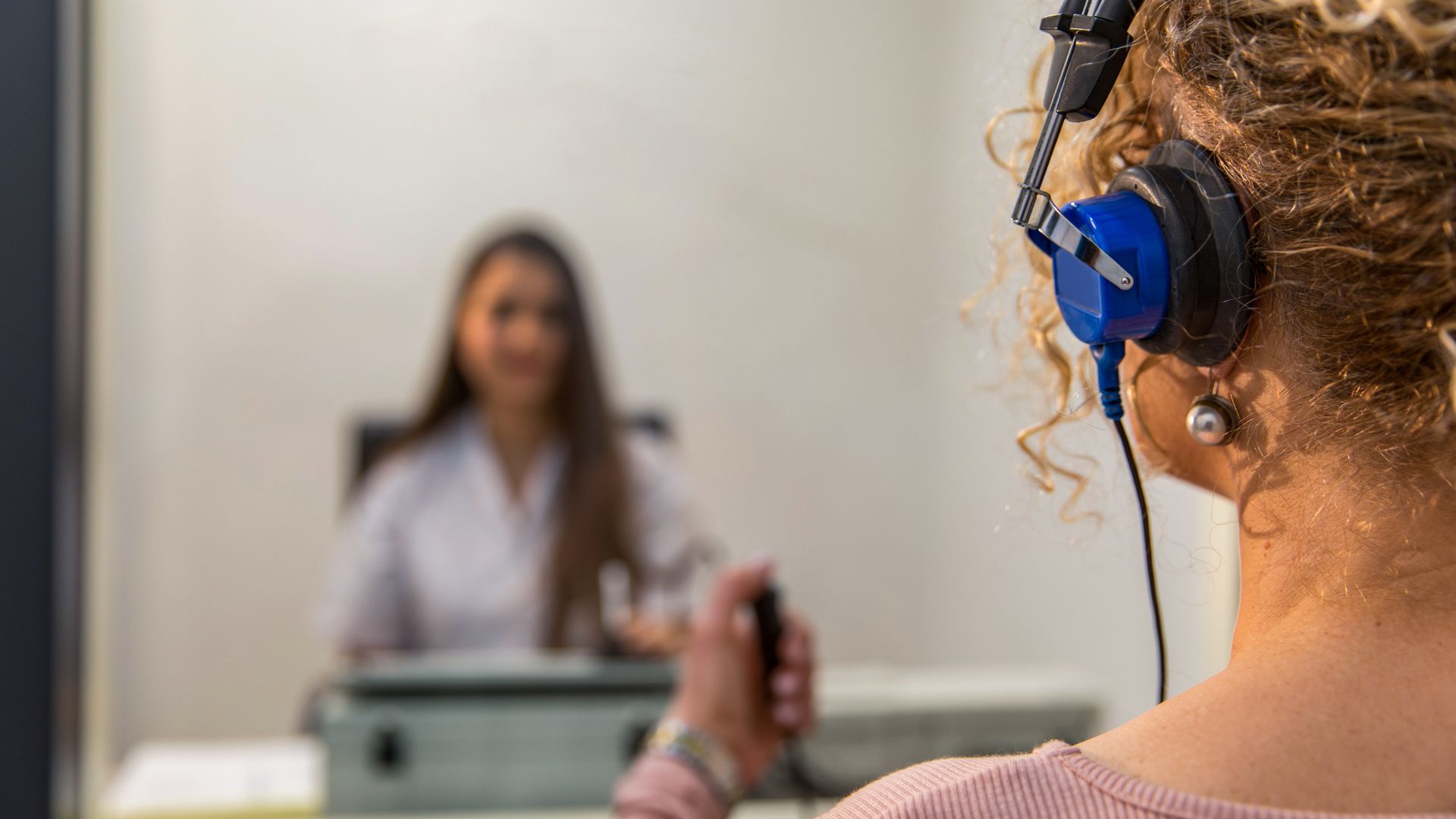
In a sound-treated room, you’ll be asked to detect sounds and different tones.
A comprehension test also makes it possible to assess the sound level at which you can properly analyze and understand sounds.
Once the test is completed, the healthcare professional is able to establish an official diagnosis and offer solutions adapted to your hearing level.
These solutions vary depending on the condition of the ear and the source of the problem. In many cases, hearing loss can be treated by wearing the right hearing aid to match your needs.
Hearing Test and Hearing Screening: What Are the Differences?
Several hearing aid providers offer free hearing screening. Hearing screening is not a hearing test, but it offers the perfect opportunity to quickly detect a hearing problem and assess the problem.
Hearing screening is much faster, taking about 15 minutes and providing instant results.
Hearing tests and hearing screenings are not opposites, but rather two complementary procedures that can work together to provide you with a comprehensive assessment of your hearing as well as solutions tailored to your situation.
When Is a Screening Hearing or a Hearing Test Recommended?
Hearing screening is usually a free procedure. It’s worth recommending it to anyone who has any doubts about their hearing.
If you notice that you or someone in your close circle is showing signs of hearing loss, don’t hesitate to book a hearing screening appointment. Here are some of the common signs of hearing loss:
- Frequently asking others to repeat what they are saying
- Having difficulty understanding a discussion in noisy environments
- Feeling that others are mumbling or not articulating clearly
- Missing certain sounds (doorbell or phone ringing)
- Feeling tired after extended listening periods (discussions, television, etc.)
A hearing test is rarely recommended as a first assessment. Because it’s a more complex and time-consuming procedure, it’s usually performed by an audiologist and requires an appointment.
The hearing test is usually a follow-up to a hearing screening and may be recommended when the hearing healthcare professional detects certain hearing disorders during the screening.
In short, if you think you need a hearing test, make an appointment for a hearing screening first. Hearing healthcare professionals can guide you through assessing your needs and then recommend the next steps to help you take care of your hearing.
Book a Free Hearing Screening Appointment Today!
The Gaudreault & Rhéaume team is ready to welcome you as soon as possible. Make an appointment for a free hearing screening and get a spot in the same week!
Gaudreault & Rhéaume Audioprothésistes, dedicated teams in Montreal and Laval. Contact us today!
– Marilyn Généreux, audioprosthetist