
What You Need to Know About the Different Types of Hearing Aids
IN SHORT
The two main types of hearing aids are behind-the-ear (BTE) and in-the-ear (ITE) devices.
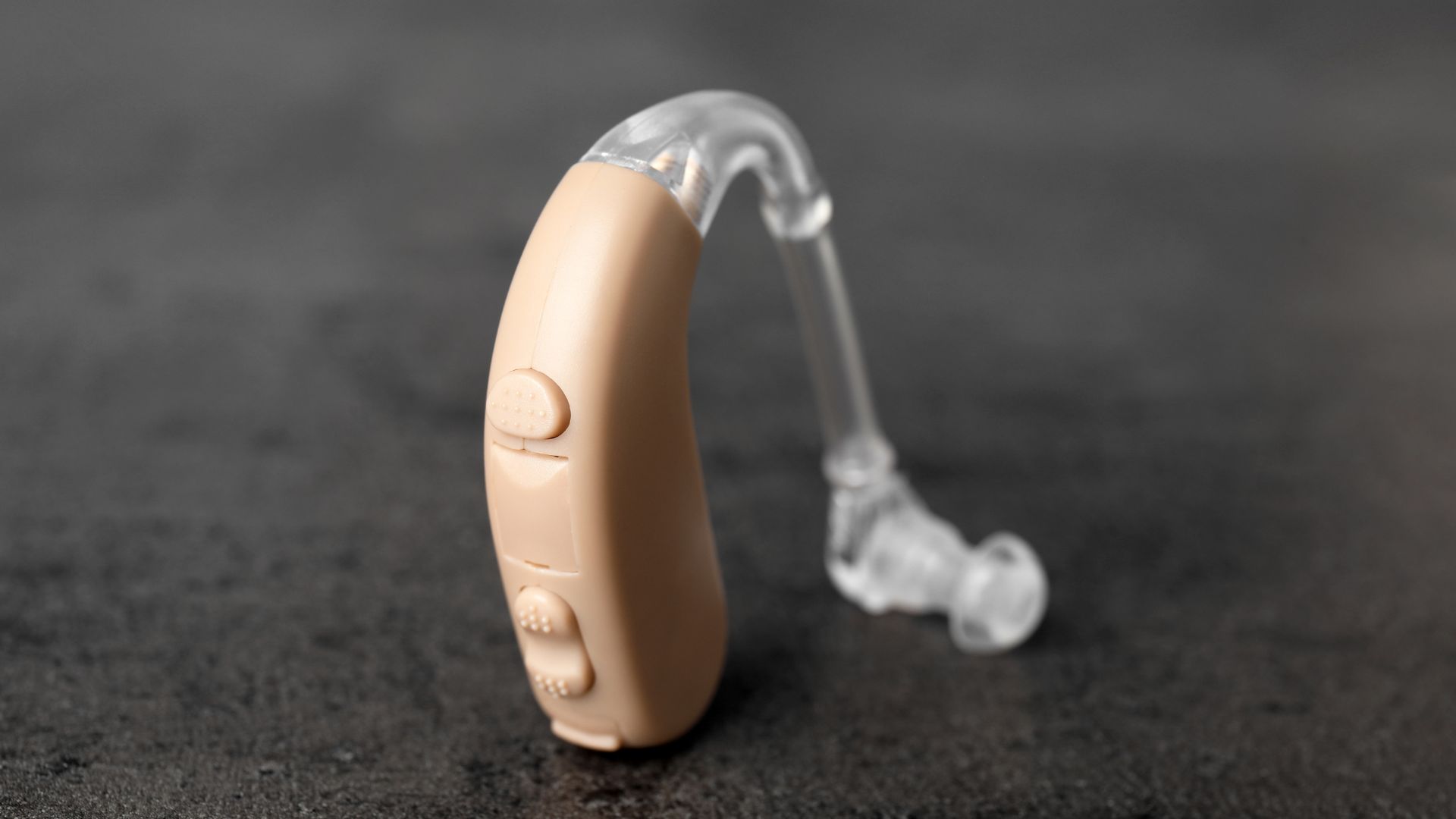
A behind-the-ear hearing aid consists of a housing placed behind the ear and connected to a microphone or receiver, which can take many different forms.
In-the-ear hearing aids come in a wide variety of shapes, but what all devices of this type have in common is that they are placed directly inside the ear and are more discreet than behind-the-ear hearing aids.
Behind-the-Ear
The behind-the-ear (BTE) hearing aid is a very powerful type of hearing aid and is ideal for users with more severe hearing loss.
In some cases, it is also preferable for users with smaller ear canals, even if their hearing loss is more moderate.
The main component of a behind-the-ear hearing aid is an electronic unit that is placed behind the ear. This unit is connected to an earpiece that fits into the ear canal via a transparent tube.
Today, this housing is much smaller than it used to be, making it easier to conceal, although this type of hearing aid remains the most visible style.
Of course, its larger size allows it to accommodate more electronic components and deliver greater power. This is why it is often preferred in cases of more severe hearing loss.
Here is a summary of the main advantages of behind-the-ear hearing aids compared to in-the-ear hearing aids:
- More comfortable than devices that fit deep inside the ear
- Better sound amplification
- Longer lifespan
- Less susceptible to moisture and earwax buildup
The In-the-Ear Receiver: RITE
A fairly popular type of behind-the-ear hearing aid, in-the-canal receivers—often referred to as RITE or RIC—are smaller than other hearing aids of this type.
Instead of a clear tube connected to an earpiece, RITE devices use a thin wire that connects them to a receiver placed inside the ear canal. In this sense, they are a hybrid between behind-the-ear devices and invisible in-the-canal devices.
In-Ear
There are many different types of in-the-ear hearing aids, which means there is an in-the-ear hearing aid to suit most types of hearing loss.
The main thing they have in common is that in-the-ear hearing aids are placed directly in the ear, rather than in a housing that sits behind the ear.
It is therefore important that the device is custom-made to fit your ear, to ensure not only greater comfort but also optimal sound quality.
They are generally easier to conceal, as they consist of an earpiece, usually skin-coloured, and have no tubes or external components.
Generally, in-the-ear hearing aids take the form of a half-shell or full-shell device.
In practical terms, these names distinguish between in-the-ear hearing aids that fit over half of the outer ear (half-shell) and those that fit over the entire outer ear (full-shell).
As with behind-the-ear hearing aids, the size of the device helps to provide a longer lifespan as well as additional features or improved hearing performance, depending on the patient’s needs.
Intracanal
Intracanal hearing aids form a large category of in-the-ear hearing aids and are themselves divided into several different groups.
What they all have in common is that all intracanal hearing aids are inserted directly into the ear canal and do not protrude as far from the outer ear as even half-shell hearing aids.
The three main types of intracanal hearing aids are the in-the-canal (ITC), the completely-in-canal (CIC) and the invisible-in-canal (IIC) hearing aids.
As their names suggest, the main difference is a matter of size.
The In-the-Canal Device
The in-the-canal hearing aid fits into the lower third of the outer ear and is easy to insert and remove. It usually features a directional microphone, allowing you to hear where sounds are coming from. This is a significant advantage.
The Completely-in-Canal Device
The completely-in-canal hearing aid fits inside the ear canal. The only visible part of the hearing aid is the front plate, which is usually aligned with the opening of the ear canal, making the hearing aid invisible in most situations.
The Invisible-in-Canal Device
The most discreet type of hearing aids available, these devices are custom-made to fit inside your ear canal. The only parts that protrude are small tugs that make it easy to remove the device.
Due to their size, they do not feature directional microphones, which can be an advantage in certain situations.
Indeed, the absence of a directional microphone reduces background noise and often allows essential sounds to be captured more clearly.
Find the Right Type of Hearing Aids for You Today
As every hearing loss is different, it is important to find the hearing aid that best suits your needs.
As well as considering the severity of your hearing loss, it is always important to take your personal needs into account: discretion, battery life, ease of use, etc.
At Gaudreault & Rhéaume Audioprothésistes, our professionals take every care to ensure you find a hearing aid that suits your lifestyle.
If you need a new hearing aid, book an appointment at one of our clinics in Montreal or Laval today.
– Marilyn Généreux, audioprosthetist